Exploring the Benefits of CNC Milling Machines in Today’s Industry
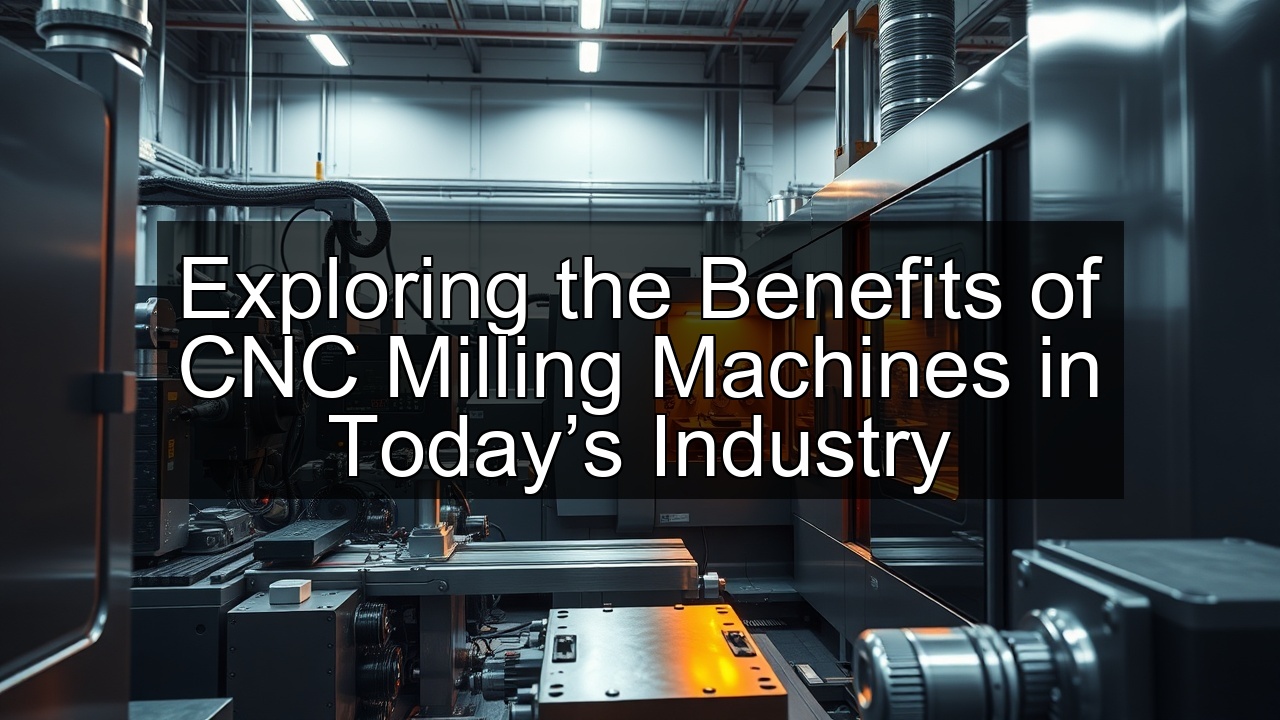
Understanding CNC Milling Machines and Their Role in Precision Machining
What Are CNC Milling Machines?
CNC milling machines, or computer numerical control milling machines, have revolutionized the landscape of precision machining. These advanced tools use computer-controlled systems to operate milling tools, enabling manufacturers to produce complex parts with high accuracy and repeatability. Unlike traditional milling machines, CNC machines automate the operation, minimizing human error and enhancing productivity. CNC milling machines work by removing material from a workpiece, typically made from metals, plastics, or alloys, to create desired shapes and features. The versatility of CNC milling makes it suitable for various applications, from automotive components to intricate aerospace parts.
The Evolution of Computer Numerical Control in Machining
The journey of computer numerical control (CNC) began in the 1950s, with the advent of numerical control (NC) machines that relied on punched tape for operation. As technology progressed, manufacturers developed CNC systems that utilized computers for improved functionality and precision. This evolution allowed for more complex machining processes and enhanced design capabilities, including CAD (Computer-Aided Design) integration. Modern CNC milling machines incorporate advanced software for CNC programming, enabling engineers to create intricate designs with unparalleled accuracy and tolerances. The introduction of robotics into CNC milling has further accelerated the machining process, allowing for automation that optimizes production efficiency.
Key Advantages of CNC Milling Machines in Modern Manufacturing
Unmatched Accuracy and Tolerances
One of the standout benefits of CNC milling machines lies in their exceptional accuracy and ability to maintain tight tolerances. Precision CNC machining ensures that even the most intricate parts meet stringent specifications, critical in industries such as aerospace and automotive manufacturing. The automated nature of CNC machines eliminates human error, providing consistent surface finishes and precise dimensions across multiple production runs. Manufacturers can rely on CNC milling to produce components with tolerances as tight as ±0.001 inches, which is essential for parts that require high levels of precision, such as titanium alloys used in aircraft fabrication. This level of accuracy not only enhances product quality but also reduces waste and lowers production costs.
Automation and Robotics in CNC Machining
Automation plays a crucial role in modern CNC machining, enabling manufacturers to streamline their operations and improve efficiency. The integration of robotics into CNC milling processes has transformed the industry, allowing for rapid production cycles and reduced labor costs. Automated CNC machines can operate continuously, performing tasks such as loading and unloading materials without human intervention. This capability not only boosts productivity but also enhances safety in the machine shop. The use of automated lathe systems and robotic arms for material handling allows fabricators to focus on higher-level tasks, such as design and quality control. Additionally, CNC machining services that utilize automation can respond more swiftly to market demands, providing custom machining solutions tailored to specific client needs while maintaining cost-effectiveness.
Versatility with Various Materials: Metals, Plastics, and Alloys
CNC milling machines excel in their ability to process a wide range of materials, including metals such as gold, copper, and titanium, along with various plastics and composite alloys. This versatility makes CNC milling an attractive option for manufacturers across diverse industries. For instance, in the aerospace sector, CNC cnc machining industry machines can efficiently mill titanium components that withstand extreme heat and stress, while in the automotive industry, they can produce complex plastic parts with fine details. CNC milling also accommodates various techniques such as laser cutting and plasma cutting, enabling fabricators to achieve intricate designs and superior surface finishes. The ability to work with different materials allows CNC machining services to cater to a wider array of projects, from rapid prototyping to large-scale production runs.
Applications of CNC Milling in Various Industries
CNC Milling in the Automotive Sector
The automotive industry significantly benefits from CNC milling technology. Precision CNC machining enables manufacturers to produce high-quality components, including engine parts, transmission housings, and complex assemblies. CNC milling machines efficiently fabricate intricate designs that meet rigorous safety and performance standards. Additionally, the rapid prototyping capabilities of CNC milling allow automotive engineers to test new designs and iterate quickly, facilitating innovation in vehicle manufacturing. As the demand for custom auto parts rises, CNC custom machining services offer tailored solutions that enhance performance and reliability while keeping production costs manageable.
Precision Machining for Aerospace and Aircraft Manufacturing
Aerospace manufacturers rely on CNC milling to produce critical components that require exact tolerances and robust materials. CNC machining plays a vital role in fabricating parts for aircraft, such as wing structures, fuselage components, and landing gear. The ability to work with advanced materials like titanium alloys ensures that these components can withstand the extreme conditions of flight. Precision engineering in aerospace applications demands a focus on safety, and CNC milling machines deliver the accuracy needed to meet these stringent requirements. Furthermore, innovative CNC machining technology allows for the production of lightweight yet strong parts, contributing to overall aircraft efficiency and performance.
Utilizing CNC for Rapid Prototyping and Custom Fabrication
Rapid prototyping has become a cornerstone of product development across many industries, and CNC milling machines play a critical role in this process. The speed and accuracy of CNC machining enable manufacturers to create prototypes quickly, allowing designers and engineers to test and refine their concepts before moving into full-scale production. Custom fabrication using CNC machines allows companies to produce unique parts tailored to specific project requirements. Whether it’s creating custom tooling, specialized fixtures, or one-of-a-kind components, CNC machining services provide the flexibility that modern manufacturers need to stay competitive in a fast-paced market.
Future Trends and Innovations in CNC Machining Technology
The Rise of Hybrid CNC Machines
Hybrid CNC machines are emerging as a game-changer in the machining industry, combining traditional milling with additive manufacturing capabilities. These machines allow manufacturers to create complex geometries that traditional machining methods cannot achieve alone. By integrating 3D printing with CNC milling, fabricators can reduce material waste and improve production efficiency. Hybrid machines also enable the use of advanced materials and complex designs, pushing the boundaries of what is possible in precision machining. As the technology continues to evolve, manufacturers will increasingly adopt hybrid solutions to enhance their machining capabilities and respond to the demands of modern engineering.
Integrating 3D Printing with CNC Milling for Enhanced Efficiency
The integration of 3D printing technologies with CNC milling represents a significant innovation in the manufacturing landscape. This combination allows for the rapid production of complex parts while maintaining the precision that CNC milling offers. By leveraging both techniques, manufacturers can streamline their operations, reduce lead times, and improve overall efficiency. For instance, fabricators can 3D print intricate components and then use CNC milling for finishing touches, ensuring superior surface quality and accuracy. This synergy not only enhances productivity but also opens new avenues for design innovation and customization in various industries.
Advancements in CNC Programming and Tooling Techniques
Ongoing advancements in CNC programming and tooling techniques are shaping the future of CNC machining. New software solutions and programming methodologies enable manufacturers to optimize machining processes, reducing cycle times and increasing productivity. Enhanced tooling techniques, such as improved cutting tools and coatings, allow for higher speeds and feeds, resulting in better surface finishes and longer tool life. Additionally, the development of smart CNC machines equipped with sensors and data analytics capabilities provides real-time feedback, enabling manufacturers to monitor performance and make data-driven decisions. These innovations position CNC machining at the forefront of modern manufacturing, driving efficiency and precision to new heights.
See Also
- Outsourcing CNC Machining Services for Cost Efficiency
- How CNC Programming is Shaping Precision Machining Techniques
- Why Precision CNC Machining is Critical for High-Tech Industries
- Hybrid Technologies in CNC Machining a Game Changer for Manufacturers
- How Precision CNC Machining is Transforming Metal Fabrication